
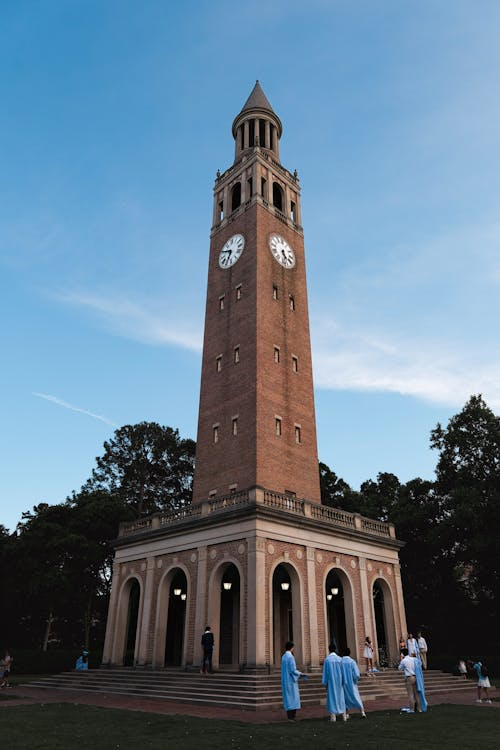
A common complaint of university professors across the country is that students do not read syllabi.[1] While this problem will likely persist among students, University of North Carolina (“UNC”) system professors are now navigating a significant shift in how their syllabi are treated and distributed. As of January 15, 2026, UNC professors’ syllabi are now considered public records.[2]
This change did not come out the (Carolina) blue. In late July 2025, the Oversight Project, an offshoot of the conservative Heritage Foundation, submitted a request for the syllabi of about 70 UNC-Chapel Hill courses.[3] The goal of this inquiry was to identify academic materials that were in supposed non-compliance with President Trump’s Executive Order 14173,[4] which demanded compliance with Students For Fair Admissions v. Harvard[5] and greater oversight over Diversity, Equity, and Inclusion (DEI) programs on college campuses.[6] The Oversight project sought UNC Chapel Hill syllabi that contained DEI keywords such as “anti-racism,” “intersectionality,” and others.[7]
In August 2025, UNC-Chapel Hill refused to honor this request, writing that the syllabi were “the intellectual property of the preparer,” or the professor.[8] However, like Bill Belichick’s football team, this interpretation gained no traction. UNC-Greensboro complied with a similar request only a few months later, after officials there determined that syllabi were public records like “most other university documents.”[9] UNC system officials acted quickly to remedy this school-split, and in December 2025, decided to enact a single uniform rule: the syllabi are public records and thus accessible to everyone.[10] In an op-ed for The News & Observer, UNC system President Peter Hans explained that “syllabi transparency” combats “dangerously low trust in some of society’s most important institutions” by fostering open debate and discussion.[11]
Like Dean Smith’s Four Corners offense, the regulation operates pretty simply. Beginning in the 2026-27 academic year, UNC system schools must develop an online database that makes syllabi “readily searchable to the public.”[12] Syllabi must include all the standard features: course name and description, materials, learning outcomes, and more.[13] However, the date and time of the class being held is not required.[14]
There are several legal concerns arising from this decision. First, professors may have a legitimate claim that this work is their intellectual property and protected by copyright. As explained by Wake Forest Law Professor Zaneta Robinson, copyright law exists in “a gray area” in higher education.[15] While information is created by the professor, employment at a UNC system school requires compliance with North Carolina public record law.[16] However, UNC-Chapel Hill officials were initially firmly convinced that syllabi fell into the exception that protects property rights like faculty research or personal records.[17] The abrupt change of course demonstrates that the UNC system rule may stand on ambiguous legal ground.
Second, some faculty have expressed concern that making syllabi public could jeopardize safety. While the date, time, and location of the class in question are not required to be reported,[18] North Carolina State Professor Belle Boggs expressed concern that viewers of syllabi may harass faculty and students, whether online or in person, if they find that the class teaches something not to their liking.[19] This claim has real merit. In 2025, UNC-Charlotte staff faced employment consequences when they were secretly recorded making comments about the University’s Planned DEI rollbacks.[20] However, none of these concerns were addressed in the policy change.[21]
Finally, there may be a significant chilling effect on faculty speech. According to two UNC Charlotte Professors, faculty will feel pressured to “self-censor the content of their courses to avoid being pulled into the political spotlight.”[22] Put more bluntly by the Daily Tar Heel, UNC-Chapel Hill’s student paper, this decision was “not about transparency or public accountability, but about instilling fear in Carolina faculty.”[23]
The UNC system is not the first public university network to adopt these measures. Florida, George, Ohio, Texas, and Indiana have adopted or proposed similar measures.[24] But next school year will be the first time the Tar Heel state makes syllabi public. It remains to be seen how the policy shakes out.
[1] See, e.g., u/Violet_Plum_Tea, Reddit (r/Professors), Wait, do they REALLY not read the syllabus at all? (2021), https://www.reddit.com/r/Professors/comments/lv0t7s/wait_do_they_really_not_read_the_syllabus_at_all/.
[2] See UNC Policy 400.1.6(III)(B)(1)–(3), https://www.northcarolina.edu/apps/policy/doc.php?id=3559#:~:text=publicly%20available%20and:-,1.,4%5D.
[3] Ryan Quinn, Conservative Group Requests Materials for Over 70 UNC Courses, Inside Higher Ed. (July 29, 2025), https://www.insidehighered.com/news/faculty-issues/academic-freedom/2025/07/29/conservative-org-requests-materials-70-chapel-hill.
[4] Exec. Order No. 14173, 90 Fed. Reg. 8633 (Jan. 21, 2025).
[5] 143 S.Ct 2141 (2023). UNC-Chapel Hill was the public school co-defendant with Harvard.
[6] Exec. Order No. 14173, 90 Fed. Reg. 8633 (Jan. 21, 2025).
[7] Id.
[8] Korie Dean, UNC System Weighs Requiring Course Syllabi to be Public, The Assembly (Dec. 10, 2025), https://www.theassemblync.com/news/education/higher-education/unc-syllabi-public/#:~:text=UNC%2DChapel%20Hill%20denied%20the,syllabi%20without%20the%20instructor’s%20permission.%E2%80%9D.
[9] Id.
[10] See Laura Spitalniak, UNC to Require Faculty to Publicly Post Syllabi in 2026-27, Higher Ed. Dive (Dec. 22, 2025), https://www.highereddive.com/news/unc-to-require-faculty-to-publicly-post-syllabi-in-2026-27/808542/.
[11] Peter Hans, Opinion, All Course Syllabi Will be Made Public to Promote Transparency Amid Scrutiny, The News and Observer (Dec. 11, 2025), https://amp.newsobserver.com/opinion/article313599782.html.
[12] UNC Policy 400.1.6(III)(B)(1).
[13] See id. at (II)(C).
[14] Id. at (V)(A).
[15] Brianna Atkinson, Who Owns a Public University Syllabus?, Open Campus (Sept. 9, 2025), https://www.opencampus.org/2025/09/09/who-owns-a-public-university-syllabus/.
[16] Id.; see also N.C. Gen. Stat. § 132.
[17] Atkinson, supra note 15.
[18] UNC Policy 400.1.6(V)(5).
[19] Brandon Kingdollar, UNC System Faculty Condemn Proposed Policy Disclosing Course Materials to Public, NC Newsline (Dec. 11, 2025), https://ncnewsline.com/2025/12/11/unc-system-faculty-condemn-proposed-policy-disclosing-course-materials-to-public/.
[20] Id.
[21] See UNC Policy 400.1.6; Hans, supra note 11
[22] Annelise Mennicke & Caitlin Schroering, Commentary, Publicly Posting Course Syllabi Will Harm North Carolina’s Universities, NC Newsline (Dec. 11, 2025), https://ncnewsline.com/2025/12/11/publicly-posting-course-syllabi-will-harm-north-carolinas-universities/.
[23] Editorial Board, Opinion, Public Syllabuses Are Yet Another Attempt to Chill Faculty Speech, Daily Tar Heel (Jan. 20, 2026), https://www.dailytarheel.com/article/opinion-editorial-unc-public-syllabuses-faculty-speech-20260120.
[24] See Dean, supra note 8.


