
After a long, tumultuous journey, S.B. 50 reached the highest height a mere bill can attain. Today, it languishes in legislative limbo.
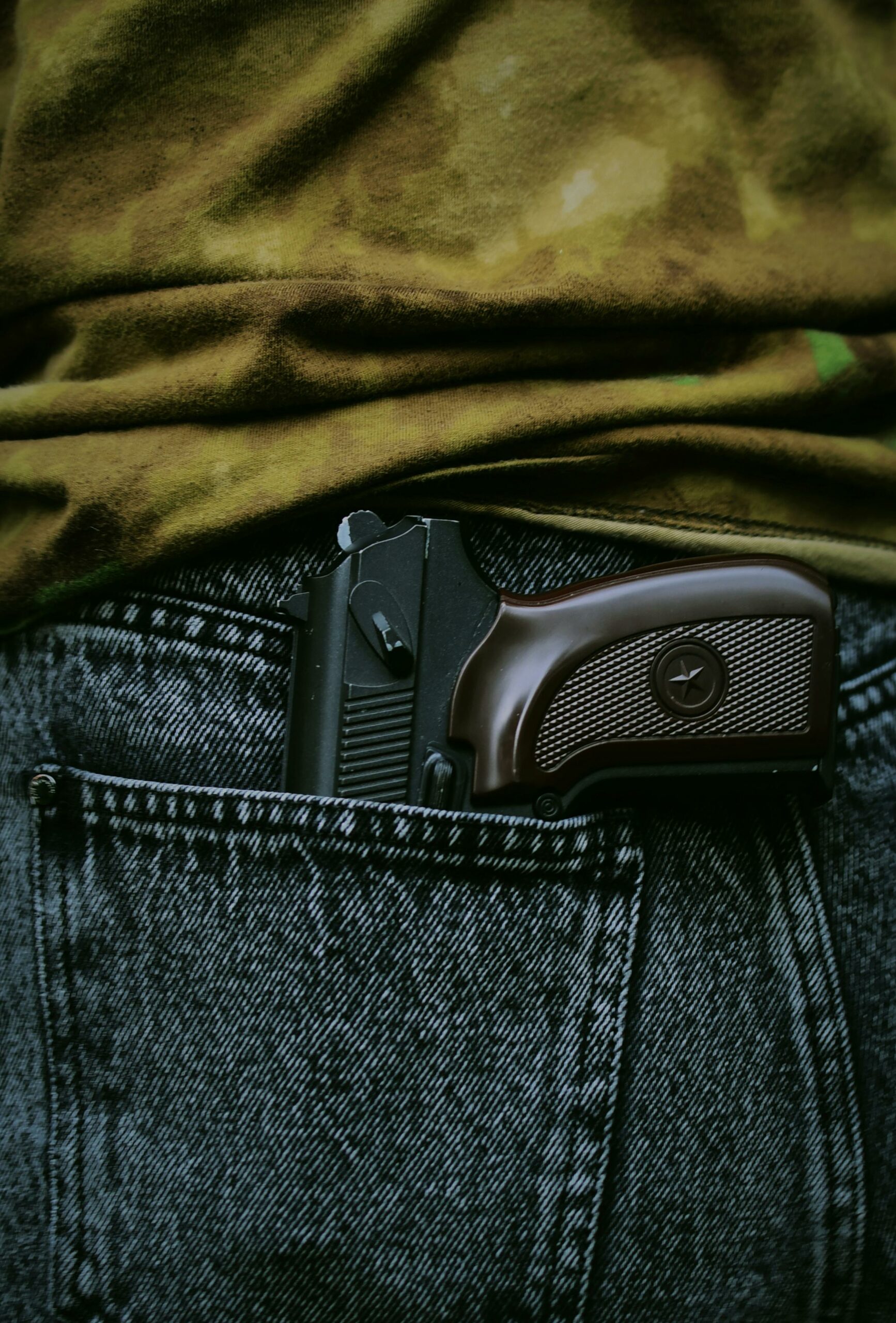
Also known as “Freedom to Carry NC,” S.B. 50 would legalize permitless concealed carry—also known as constitutional carry—in North Carolina.[1] Specifically, S.B. 50 would permit U.S. citizens over the age of 18—who are eligible to own, possess, or receive a firearm under applicable law—to carry concealed handguns without a permit or training.[2]
The bill provides twelve disqualifying conditions, including being under indictment for a felony or being “an unlawful user of, or [being] addicted to, marijuana, alcohol, or any depressant, stimulant, or narcotic drug, or any other controlled substance.”[3] Additionally, S.B. 50 prohibits concealed carry in certain locations and under certain circumstances.[4]
Recently, there has been a nationwide shift towards constitutional carry. Currently, twenty-nine states have authorized it in some fashion.[5] Thirteen of these states have done so in the past six years.[6] If S.B. 50 were to pass, North Carolina would join twelve other states in authorizing permitless carry for eighteen-year-olds.[7]
“Freedom to Carry NC” was initially introduced in the House of Representatives as H.B. 189[8] in February 2023.[9] The bill was quickly rereferred to the House Committee on Rules, Calendar, and Operations, from which it never returned.[10]A chance for redemption came in February 2025, when the bill was introduced—in largely the same form—in the Senate as S.B. 50.[11]
S.B. 50 passed the Senate 26-18 on March 20, 2025.[12] It then traveled to the land where its predecessor was defeated, but it overcame the odds. S.B. 50 passed the House 59-48 on June 11, 2025.[13]
Then, the only thing that stood between S.B. 50 and “law status” was approval from Governor Josh Stein: a duel—Governor versus bill. On the evening of June 20, 2025, S.B. 50 met Governor Josh Stein face-to-face.[14] Quick to his pen, the Governor fired a stroke of ink, and S.B. 50 went down under a veto.[15]
After reaching the critical juncture, it seemed like S.B. 50 would suffer the same fate as its predecessor. But just nine days later, a glimmer of hope flickered: the Senate overrode the Governor’s veto with a three-fifths vote of 30-19.[16]
The House scheduled a veto override vote for the next day, but no vote occurred.[17] The House moved the vote to August 26, 2025—but that day came and went with no vote.[18] The House rescheduled the vote for September 22, 2025—but once again, no vote was held.[19] Fast forward to February 9, 2026, when the House of Representatives, for the ninth time, postponed a veto override vote for S.B 50.[20] Why has S.B. 50 been doomed to suffer in legislative limbo?
There is considerable debate surrounding the merits of authorizing constitutional carry. In his veto message for S.B. 50, Governor Stein raised many commonly expressed safety concerns.[21] According to Stein, S.B. 50 would make “North Carolinians less safe and undermine[] responsible gun ownership,” by “[a]uthorizing teenagers to carry a concealed weapon with no training whatsoever.”[22] Additionally, Stein asserts that S.B. 50 would “make the job of a law enforcement officer more difficult and less safe.”[23] Stein believes that “[w]e can and should protect the right to bear arms” but that S.B. 50 would “recklessly endanger[] law enforcement officers and our people.”[24]
Various studies suggest that the Governor’s concerns are legitimate. For example, a study assessing the impact of no-training permitless carry on gun assault rates from 1981 to 2019 found that states authorizing no-training permitless carry experienced a 32 percent increase in gun assaults.[25] Another study analyzing the relationship between permitless carry and law enforcement-involved shootings from 2014 to 2020 found that, on average, the change to permitless carry was associated with a 12.9 percent increase in those shootings.[26]
Broadly speaking, critics argue that authorizing permitless carry increases opportunities for gun violence.[27] For example, a public confrontation that might end in a shouting match in a regulated carry state is more likely to turn deadly in a state where untrained individuals can carry a firearm in public.[28] Further, permitless carry raises the risk that improperly stored firearms may be stolen from vehicles and used in crimes.[29]
Despite these concerns, there are legitimate public-policy reasons supporting permitless carry. Concealed carry permits can be expensive, and the required training to obtain one can be time-consuming.[30] Research shows that those most likely to be victims of violent crime tend to be poor.[31] These individuals would benefit most from the ability to carry a firearm; however, high fees and long training periods might prevent them from obtaining a permit.[32] Additionally, in situations where individuals face imminent threats—such as domestic violence victims or district attorneys receiving death threats—the training and waiting period for a permit may not be feasible.[33]
This is a complex issue, so it is not shocking that S.B. 50’s final judgment has been delayed for so long. For the House to successfully override Governor Stein’s veto, the override vote must achieve three-fifths approval.[34] That will be a tall order for a bill that only narrowly achieved the required majority to pass initially.[35]
The strategy now appears to be to buy time until proponents can secure the necessary votes. Despite the unlikely odds, proponents could reach the magic number if all the stars align. S.B. 50 initially passed solely on the votes of 59 House Republicans.[36] Two Republican colleagues voted no, and ten were absent from the vote.[37] If proponents can turn party dissenters and ensure that their other colleagues show up, S.B. 50 could get 71 votes—just shy of the 72 required in a vote with the full House present.[38]
The next opportunity is the vote currently scheduled for March 9, 2026.[39]
[1] S.B. 50, 2025 Gen. Assemb., Reg. Sess. (N.C. 2025).
[2] S.B. 50 § 14-415.35(a)–(b)(1).
[3] S.B. 50 § 14-415.35(b)(2)–(13).
[4] S.B. 50 §§ 14-415.36, 14-269.3, 14-277.2.
[5] Handgunlaw.us, Permitless Carry States (2026), https://www.handgunlaw.us/documents/Permitless_Carry_States.pdf.
[6] Id.
[7] Id.
[8] H.B. 189, 2023 Gen. Assemb., Reg. Sess. (N.C. 2023).
[9] House Bill 189, N.C. Gen. Assembly, https://www.ncleg.gov/BillLookup/2023/H189 (last visited Feb. 22, 2026).
[10] Id.
[11] Senate Bill 50, N.C. Gen. Assembly, https://ncleg.gov/BillLookUp/2025/S50 (last visited Feb. 22, 2026).
[12] Id.
[13] Id.
[14] Press Release, Off. of Governor Josh Stein, Governor Stein Takes Action on Four Bills, (June 20, 2025), https://governor.nc.gov/news/press-releases/2025/06/20/governor-stein-takes-action-four-bills.
[15] Id.
[16] Senate Bill 50, supra note 11.
[17] Id.
[18] Id.
[19] Id.
[20] Id.
[21] Off. of Governor Josh Stein, supra note 14.
[22] Id.
[23] Id.
[24] Id.
[25] Mitchell L. Doucette et al., Deregulation of Public Civilian Gun Carrying and Violent Crimes: A Longitudinal Analysis 1981–2019, 23 Criminology & Pub. Pol’y 833, 854 (2024).
[26] Mitchell L. Doucette et al., Officer-Involved Shootings and Concealed Carry Weapons Permitting Laws: Analysis of Gun Violence Archive Data, 2014–2020, 99 J. Urb. Health 373, 381 (2022).
[27] Cass Crifasi & Alex McCourt, Questions and Answers: Public Carry of Firearms, Permitless Carry and Stand Your Ground Laws, Johns Hopkins Ctr. for Gun Violence Sols. (March 18, 2025), https://publichealth.jhu.edu/center-for-gun-violence-solutions/2025/questions-and-answers-public-carry-of-firearms-permitless-carry-and-stand-your-ground-laws.
[28] Id.
[29] Id.
[30] Tyler R. Smotherman, More Rights, More Responsibilities: A Post-Bruen Proposal for Concealed Carry Compromise, 2024 Wis. L. Rev. 343, 376 (2024).
[31] John R. Lott, Jr., Crime Prevention Rsch. Ctr., Concealed Carry Permit Holders Across the United States: 2022, at 38 (2022), https://papers.ssrn.com/sol3/papers.cfm?abstract_id=4279137.
[32] Id.
[33] Tyler R. Smotherman, Comment, Troubleshooting the Gun-Free School Zones Act: A Call for Amendment in the Age of Constitutional Carry, 55 Tex. Tech L. Rev. 359, 391 (2023).
[34] N.C. Const. art. II, § 22.
[35] Senate Bill 50, supra note 11.
[36] House Roll Call Vote Transcript for Roll Call #426, N.C. Gen. Assembly (June 11, 2025), https://ncleg.gov/Legislation/Votes/RollCallVoteTranscript/2025/H/426.
[37] Id.
[38] Id.
[39] Senate Bill 50, supra note 11.


